I began with people,
not with weddings.
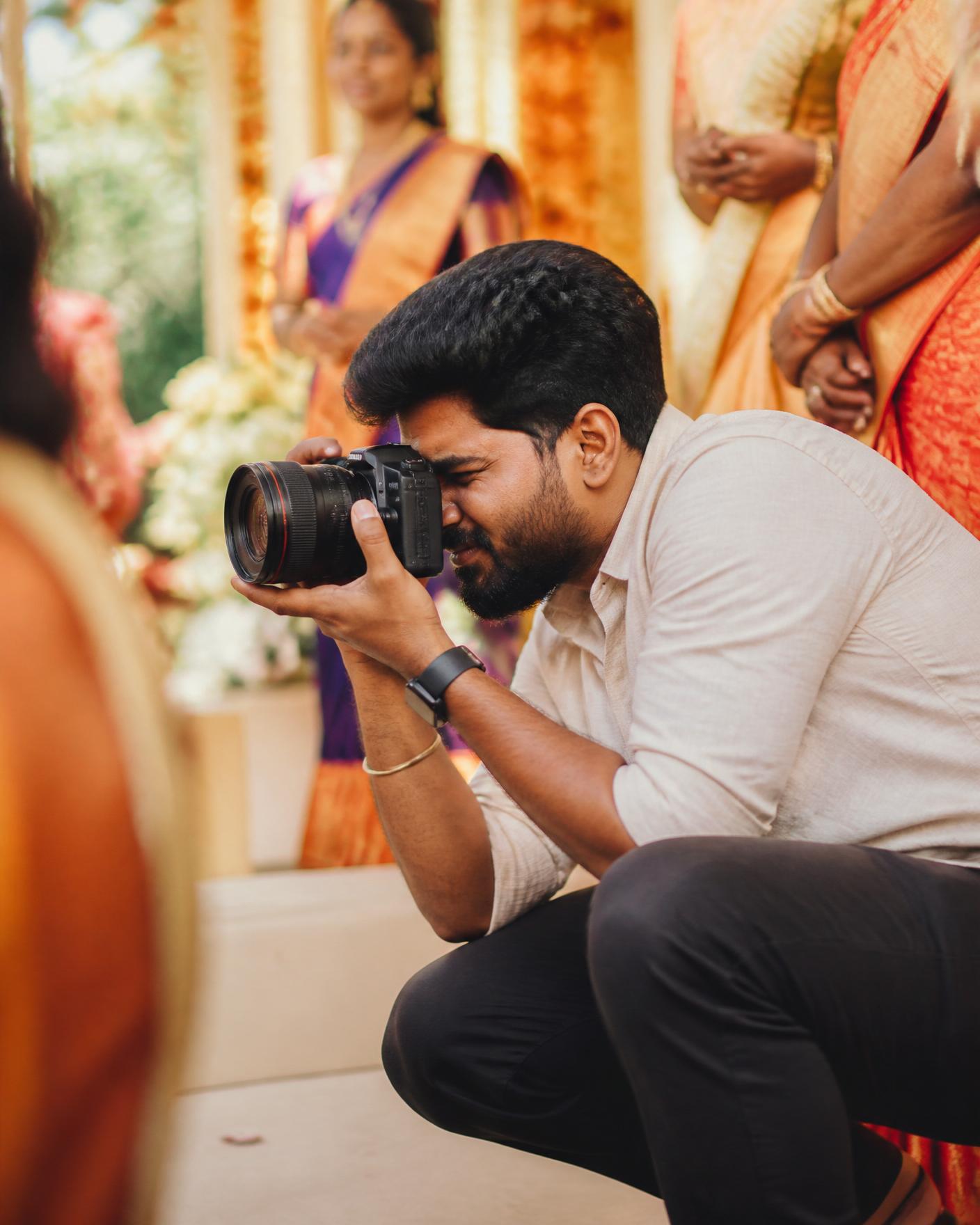
Long before Fable & Flare had a name, I was the person at the back of the room with a camera — drawn to the unguarded half-second between two people, the glance nobody performed for. Candid photography was never a style I chose. It was simply the only way of seeing that felt honest to me.
Weddings became inevitable. Nowhere else does a family compress so much love, nerve, ritual and release into a handful of days. An Indian wedding especially — the noise of a sangeet, the hush at the muhurtham, an aunt's hand steadying a bride's pallu — is the richest human material a photographer will ever be handed.
Fable & Flare exists because I wanted to bring that documentary instinct to a standard of craft and presentation usually reserved for editorial work. This is a young brand, deliberately so: built around a point of view first, and a growing archive of Indian luxury weddings second.
We believe a wedding should be remembered the way it felt from the inside — not the way it was arranged for a camera.
Candid before composed
The truest frames are the ones nobody arranged. We watch first and photograph second, so the day stays yours.
Emotion over perfection
A slightly imperfect frame with real feeling in it will always outlive a flawless one that feels staged.
Story over coverage
A wedding is a narrative with an arc — haldi to muhurtham to the last song. We photograph it as one story, not a checklist.
Restraint as luxury
Quiet presence, considered editing, no theatrics. Luxury here means nothing intrudes on the moment.
Unposed, observed,
never directed.
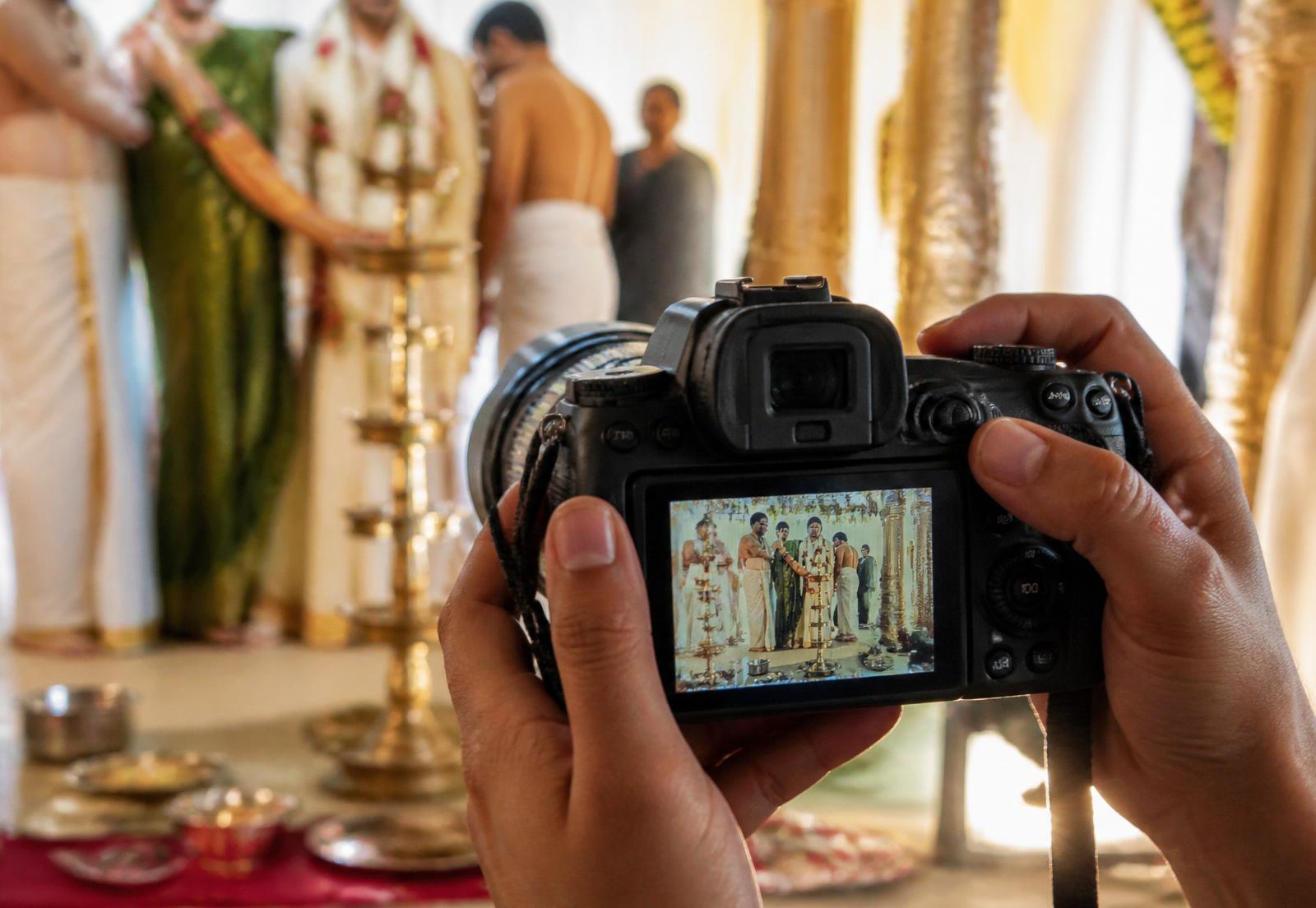
Posed photography asks a family to pause their own wedding and perform it back to you. Candid photography asks nothing. We work as observers — reading the room, staying out of sightlines, letting rituals unfold at their own pace and photographing what actually happens inside them.
In practice that means longer lenses at the mandap, no instruction during ceremony, minimal flash, and a willingness to lose a technically neat frame in order to keep a real one. Portraits still happen — a short, gentle session for the couple and for family groups — but they are a chapter, not the whole book.
The result is a set of images that still feels like your wedding a decade from now, because it was never staged for the year it was taken.
Four decisions made
in every frame.
Light
Indian weddings move from harsh mid-morning sun to lamp-lit mandaps to reception colour wash within hours. We read each room before we lift the camera and shape exposure to keep skin tones warm, true and luminous throughout.
Timing
Candid work is anticipation, not reaction. Knowing the rhythm of a muhurtham — when the thaali is lifted, when a mother's hand reaches out — means being in position a beat before the moment, never chasing it.
Position
We move on the edges: low, quiet, short bursts, never between families and their ritual. The best compliment we receive is that nobody noticed us working.
Edit
A consistent, warm, film-leaning grade applied frame by frame. Colour that honours kanjeevaram reds and temple gold rather than washing them into fashionable pastel.
The tools behind the craft.
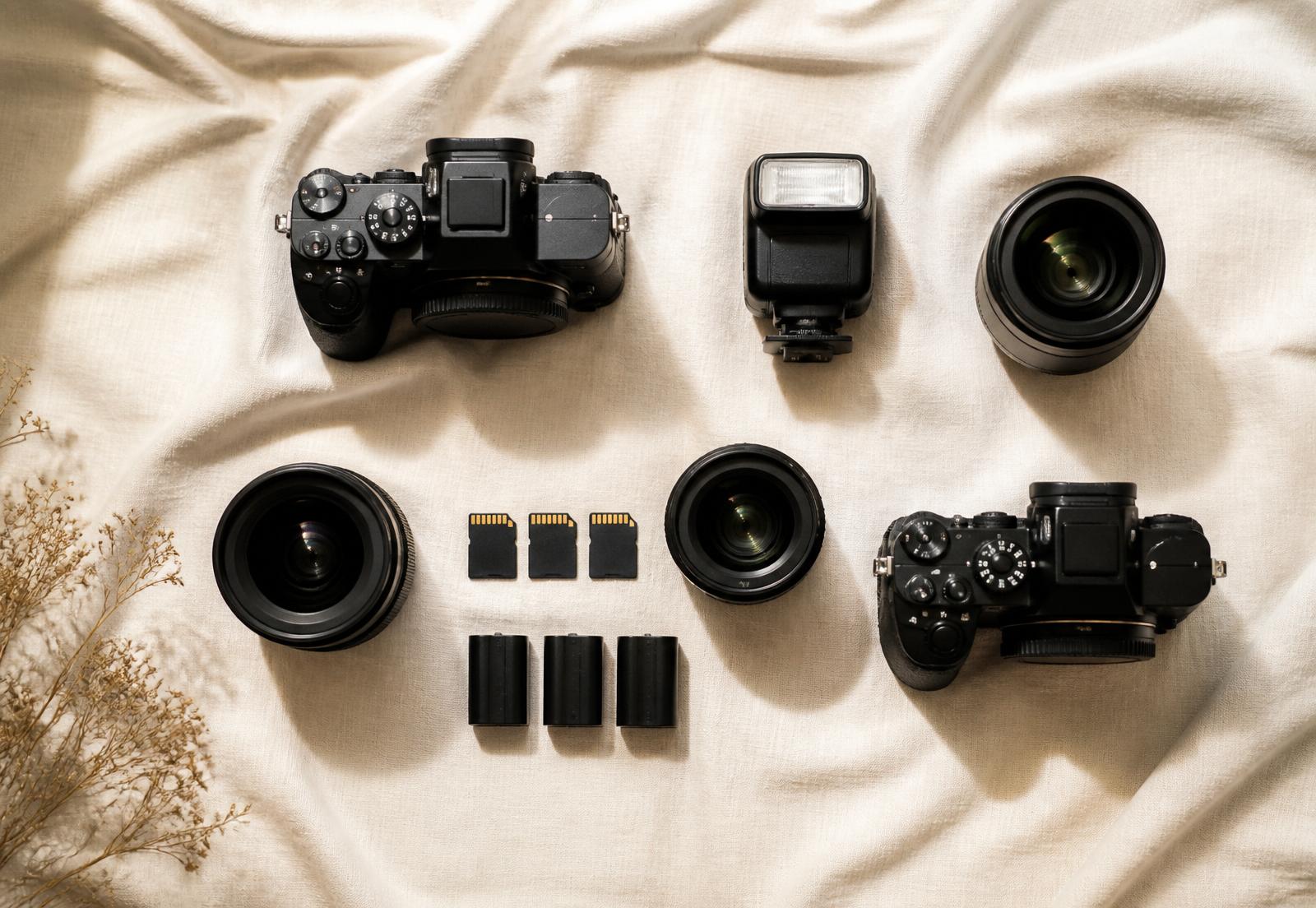
Dual full-frame mirrorless bodies carried on every event, with a third body held in reserve.
35mm, 50mm and 85mm fast primes — the candid core, for low light and natural compression.
24–70mm and 70–200mm for ceremony reach where moving closer would intrude.
On- and off-camera flash with modifiers, used sparingly and only where the venue leaves no other option.
Dual-slot in-camera backup, spare batteries and cards for full-day coverage, no single point of failure.
Colour-calibrated editing workflow with triple-redundant archival of every original file.
We are actively building our archive of Indian luxury weddings — Hyderabad, Chennai, Kerala, Mumbai and beyond. The couples who come to us now are shaping how this atelier will be remembered.
The Story Behind The Camera
I never planned to become a photographer. I became one because I was afraid of forgetting.
My story doesn't begin with a childhood DSLR. It begins on a bicycle in 2013 — pre-dawn roads, long climbs, and the Tour of Nilgiris, where I watched hundreds of riders take on mountains. In 2015 I bought an action camera, not to make films, but because I didn't want those mornings to disappear.
Years of career followed. Amazon, a business of my own, then Cognizant. Photography stayed a hobby until February 2024, when we married — and our wedding photographs simply never arrived. Weeks turned into months. Months turned into almost a year of my wife asking the same question: any update?
One evening I finally said it out loud: enough — I'll learn this myself, and our memories will never sit in someone else's hands again. Then, scrolling through old photos, something more unsettling landed. Entire stretches of my life had quietly faded. Birthdays, trips, ordinary evenings. Had I really lived them if I could barely remember them?
So I learnt on the people I love most. Every walk became a sequence, every dinner a documentary. A first maternity session in November 2025. Then, in February 2026, our son arrived — and photography stopped being a hobby. It became a way of holding onto time.
Between shoots you'll find me flying drones, riding, reading about aviation and AI, testing new gear I absolutely did not need, and drinking more coffee than I should. Cameras, apparently, reproduce when left unattended. My wife has accepted this entirely reasonable behaviour. Mostly.
My Philosophy
I don't simply capture photographs. I preserve chapters of people's lives.
Stories outlive trends.
Technology changes. Memories don't.
The greatest investment isn't gear. It's trust.
Luxury isn't expensive. Luxury is timeless.
You're not holding onto photographs. You're holding onto time.